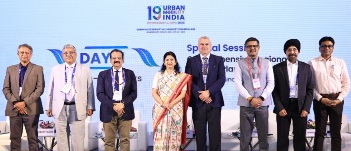
Bhubaneswar: Odisha has highlighted its integrated approach to affordable housing, combining beneficiary assistance, policy reforms, development incentives and rental housing solutions to bridge the gap between housing demand and supply. The State’s initiatives were showcased here at a session on “Affordable Housing – Demand & Supply Dynamics” during the 2nd National Urban Conclave 2026.
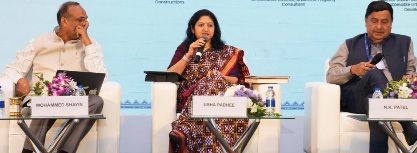
Participating as a panellist, Ms. Usha Padhee, Additional Chief Secretary, Housing & Urban Development Department, outlined the State’s efforts to expand access to affordable housing for diverse urban populations, particularly economically weaker and vulnerable households. She highlighted the importance of addressing both demand-side constraints and supply-side challenges through a combination of financial support, enabling policies and innovative housing models.
A major initiative highlighted was PMAY-Urban BANDHU (Beneficiary Assistance for Nurturing Development of Housing Units), with ₹1,615 crore earmarked over five years. The initiative seeks to strengthen affordable housing through viability support for housing projects, assistance and incentives for construction workers, and proposed housing credit assistance for eligible households. It also aims to address the housing needs of landless families and households not adequately covered by existing provisions, while promoting affordable, rental and transit housing.
The presentation showcased Odisha’s diverse housing models, including mandatory provisions in developer projects, market-based incentives, dedicated affordable housing projects, in-situ slum redevelopment, relocation, beneficiary-led construction and rental housing. These approaches are designed to respond to different household needs and financial circumstances while expanding the availability of affordable homes across urban areas.
Under beneficiary-led construction, approximately 1.4 lakh houses have been completed and occupied across urban Odisha. Affordable housing projects and in-situ redevelopment initiatives have also enabled families to access secure homes in major cities.
Further expanding housing choices, rental housing retrofitting projects in Rourkela, Dhenkanal, Paradip and Jharsuguda are being supported under BANDHU, offering additional accommodation options for migrant workers and other mobile urban populations.
Ms. Padhee also highlighted policy reforms aimed at reducing housing costs and encouraging greater participation in affordable housing development. These include substantial reductions in stamp duty and registration charges for eligible homes, mandatory provisions for Economically Weaker Section (EWS) and Low-Income Group (LIG) housing, and development incentives through additional Floor Area Ratio (FAR) and Transferable Development Rights (TDR). Reforms relating to rental housing and provisions for reserving land for affordable housing in Master Plans and Development Plans were also outlined.
Another key highlight was the proposed BHUMI (Bank of Land for Housing & Urban Masterplan and Infrastructure) framework. It envisages a dedicated land bank supported by a GIS-based land inventory, a nodal mechanism for land allocation and dedicated financial arrangements to facilitate housing and urban infrastructure development. The draft policy is under process and is proposed to be placed before the Cabinet for approval.
The session was moderated by Kumar Ravikant Singh, Joint Secretary, Ministry of Housing and Urban Affairs. Other panellists included Mohammed Shayin, Commissioner and Secretary, Haryana Housing for All Department; N.K. Patel, Chairman, NAREDCO Gujarat; Pankaj Motwani, Managing Director, Motwani Constructions; Soumendu Chatterjee, Senior Executive Director, ANAROCK Property Consultant; and Kiran Avadhanula, Senior Urban Sector Specialist and Lead, Sustainable Urban Development, KfW Development Bank.