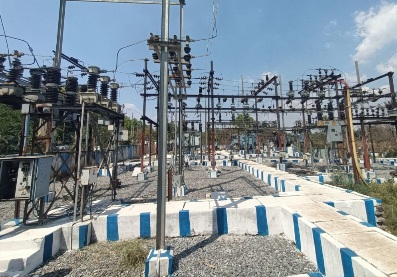

Bhubaneswar: As Odisha continues to experience an intense heat wave with temperatures reaching up to 45°C across several districts, electricity demand has surged to an unprecedented 6,775 MW, the highest ever recorded in the state.
To ensure uninterrupted supply during this critical period, Tata Power-led Odisha Discoms have activated the Power Distribution Technology Centre (PDTC), which functions as the primary command and control hub for TPCODL and also serves as the backup control centre for the other three Odisha Discoms: TPSODL, TPWODL, and TPNODL.
In simple terms, PDTC operates as the “live nerve centre” of the power distribution system, continuously monitoring the health of the electricity network and ensuring that any disturbance is detected, analysed, and addressed in real time.The PDTC works 24×7 by receiving live information from across the network, enabled through a combination of SCADA systems ( Supervisory Control and Data Acquisition) and integrated IT- OT systems. SCADA continuously captures real-time data from substations, feeders, transformers, and switching points and transmits it to PDTC: Operational Technology (OT) refers to the physical infrastructure in the field that carries electricity, while Information Technology (IT) refers to the digital systems that analyse, monÏtor, and support decision-making. PDTC sits at the critical intersection of T and OT, ensuring complete real-time visibility of the physical network within the digital control environment.
Whenever there is an abnormal condition such as a line fault, transformer overload, equipment failure, or weather-related damage, the SCADA system immediately triggers alarms at PDTC. These alarms act like instant alerts, helping operators quickly identify where the issue has occurred and what type of problem it is. This removes delays and allows immediate action.Once an alarm is received, PDTC coordinates in real time with field teams and local control centres to restore supply at the earliest. The system enables operators to isolate the affected section of the network, reroute power through alternative supply paths wherever available, and guide field crews directly to the fault location.
This “detect, isolate, and restore” approach significantly reduces downtime and improves reliability, even during large-scale disruptions. During the ongoing high-demand period, PDTC is also playing a critical role in real-time load management by continuously monitoring network conditions and ensuring balanced power flow across the system. It helps prevent overloads by enabling dynamic load redistribution and supporting timely switching actions, thereby enhancing operational stability during peak demand hours.
PDTC remains in constant coordination with the field staff, ensuring rapid response during faults caused by thunderstorms lightning activity, and high winds that frequently impact several parts of the state during summer.Despite working in extreme outdoor conditions and prolonged heat exposure, frontline teams continue uninterrupted restoration efforts to serve a population of nearly 1 crore consumers across the state.By integrating advanced monitoring systems, real-time analytics, and tightly coordinated field response mechanisms, PDTC plays a pivotal role in ensuring a stable and resilient power distribution system across Odisha.